Expeditions
Fixed Dates, Small Groups, Wild Places
Alongside our fully bespoke, tailor-made journeys, we run a small number of scheduled trekking and camping expeditions each year: set dates, a shared campfire, and a small group of fellow travellers. They're a way to join one of our wildest routes without having to build a private itinerary from scratch.
Below is what's coming up next, and a look back at the expedition we've just returned from. Spaces are limited on every departure, so get in touch early if a date catches your eye.
What's Next
Upcoming Expeditions
Upcoming
Ndoto Mountains Trekking & Camping Expedition
Samburu
16–20 October 2026 · 5 days
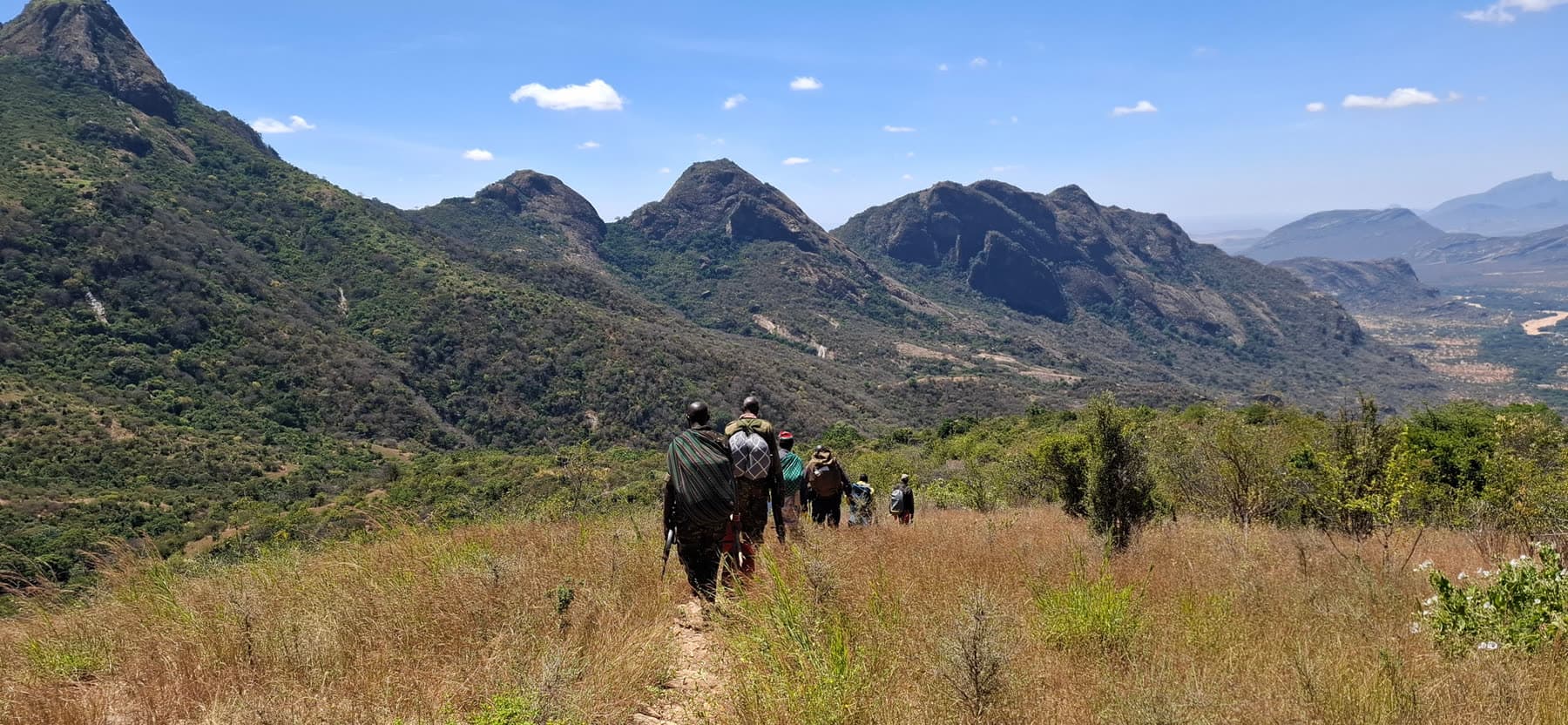
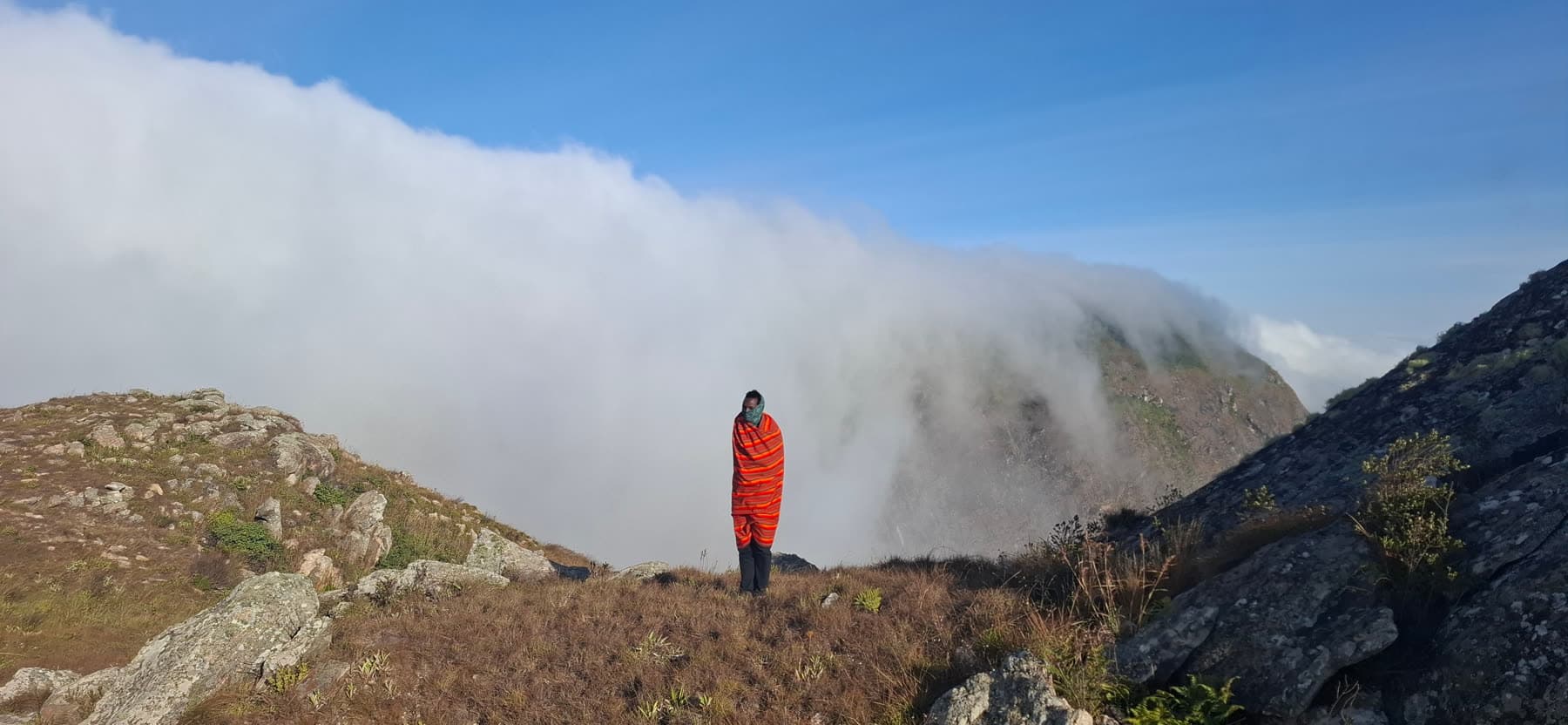
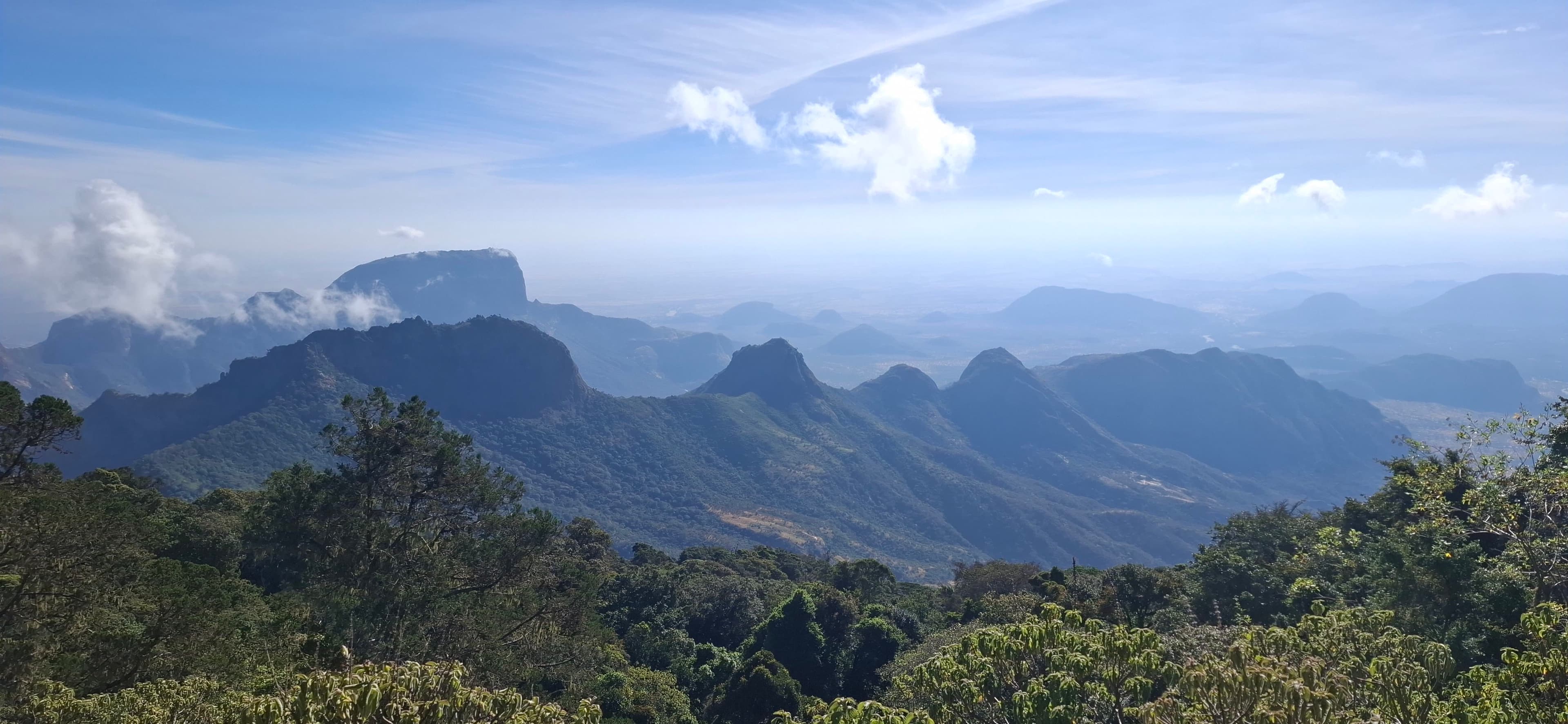
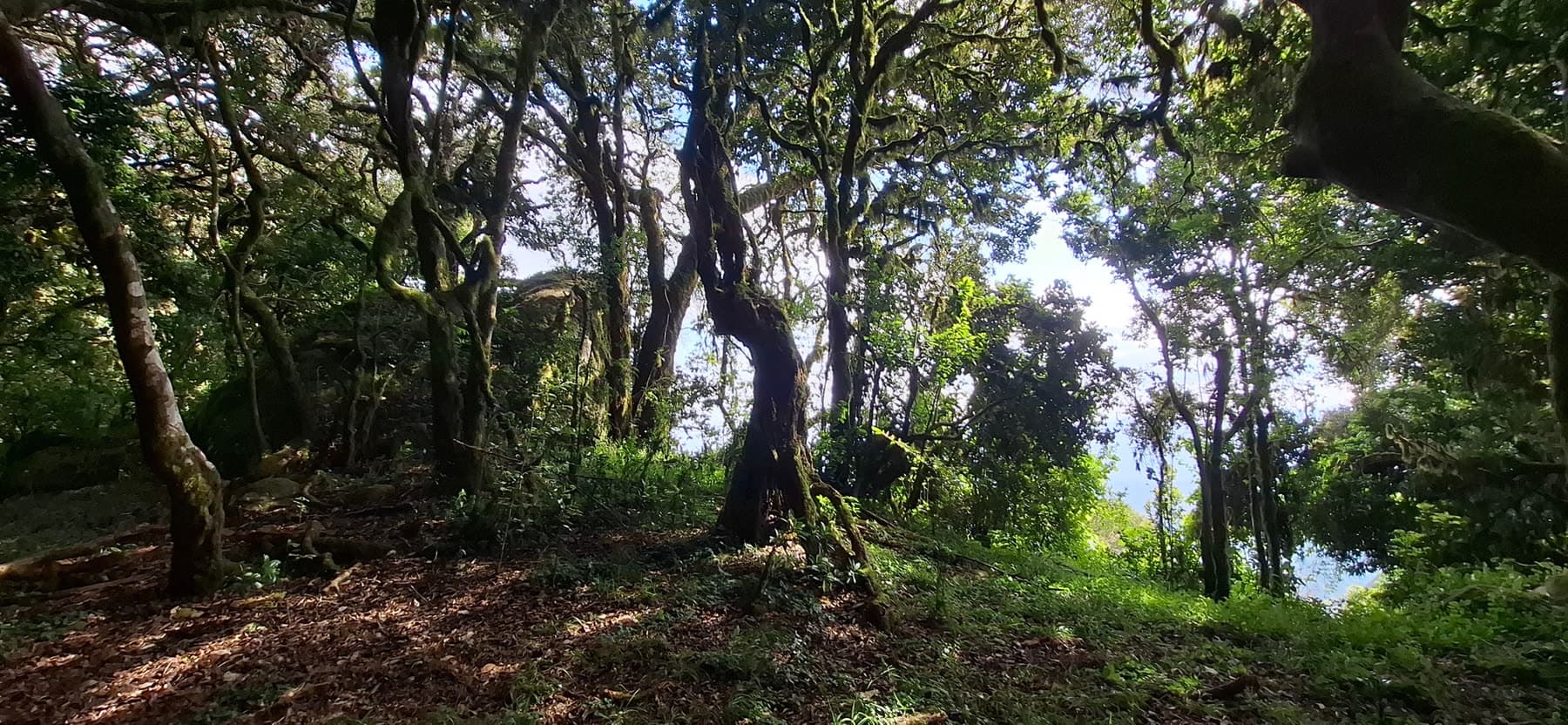
Rising from the arid plains of northeastern Samburu, the Ndoto Mountains are one of East Africa's most breathtaking landscapes. Jagged granite peaks give way to lush forested valleys and hidden natural pools. Mount Manmanet towers above the range, its slopes sheltering extraordinary wildlife, while the Milgis luggah winds between the mountains and the Matthews Range, its sandy banks alive with elephants, kudu, gazelles and monkeys.
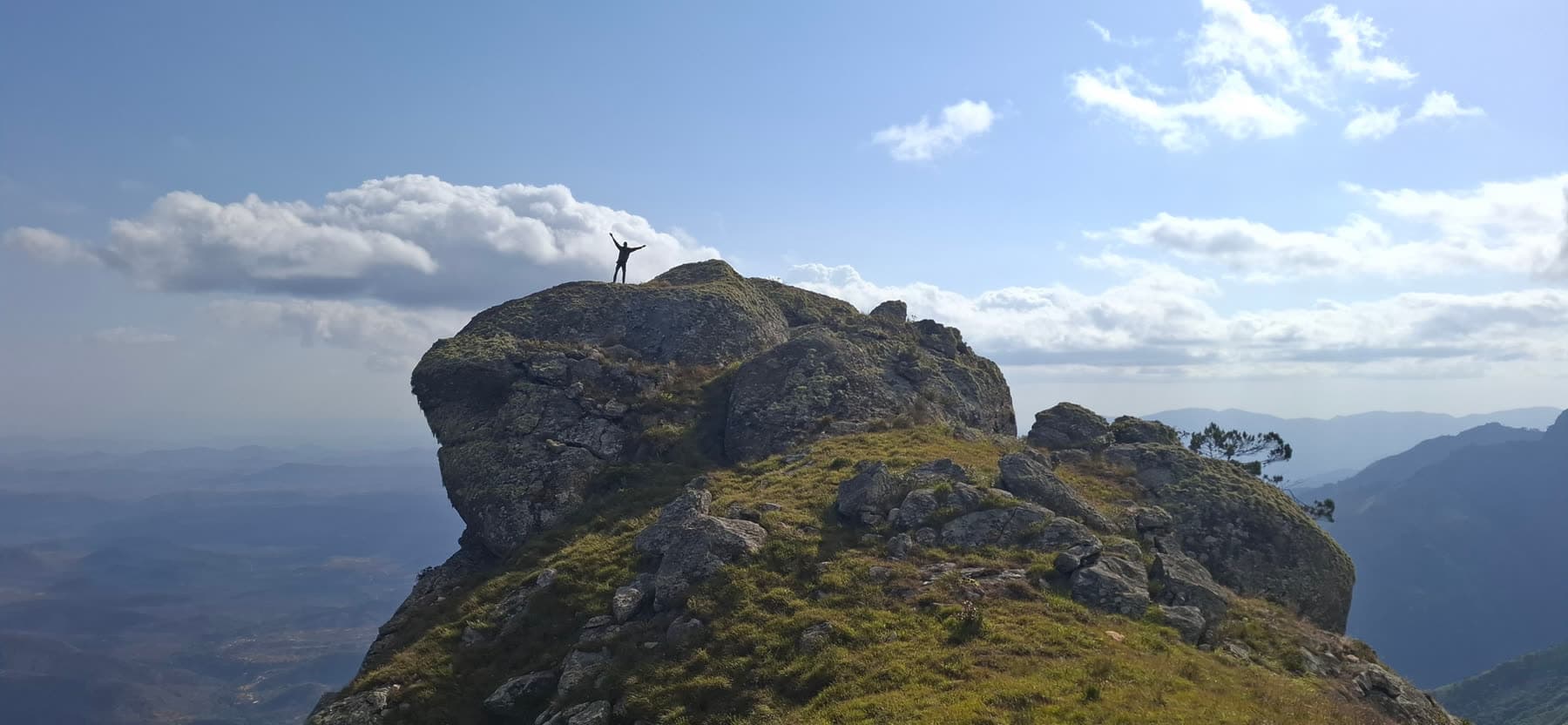
Ajabu Wild organises this small-group trekking and camping expedition in close partnership with local communities. Every night we set up camp in a different location (deep in the valley, in the midst of the forest, or on an escarpment with a stunning sunset), with some days involving significant elevation gain, rewarded with sweeping views over the plains and the Milgis luggah below. Along the way we stop at natural pools to bathe and refresh.
Days are spent reading the landscape; evenings belong to the fire, with Samburu guides sharing stories and folklore passed down through generations. Your guides and porters perform their ancient rituals to honour the mountain and the forest, giving you a rare, unscripted insight into their spiritual connection to a landscape that provides them food, pasture and medicine.
What to Expect
- A different wild campsite every night: valley floor, deep forest, and escarpment sunsets
- Bathing stops at hidden natural pools beneath Mount Manmanet
- Sliding off rocks into pristine and refreshing pools
- Campfire folklore and ancient mountain rituals with your Samburu guides
- Interacting with morans and sharing a mixture of fresh cow milk and blood (optional, of course)
- Slaughtering a goat, traditionally prepared, and eating it with your guides, rangers and porters
- Sweeping views over the Ndoto Forest and surrounding lowlands
- Trekking through the magical Ndoto Forest
- On the last night, sleep under the open stars on a mattress at the Ndoto Mountain Conservation camp
Cost & Logistics
- All-inclusive · individual booking$325/day · $1,625 total
- All-inclusive · group of 3$265/day · $1,375 total per person
- Own gear & transport · individual$200/day · $1,000 total per person
- Own gear & transport · group of 3+$160/day · $800 total per person
All-inclusive pricing covers conservancy fees, transport, all meals, some drinks, camping equipment, a trip facilitator, one local guide, and a crew of around 15 porters and rangers. Booking as a group of three or more? Dates are fully flexible, so we can build the trip around a birthday or other occasion.
Upcoming
Marsabit Expedition
Marsabit · Turkana
Early November 2026 (dates TBC) · 12 days
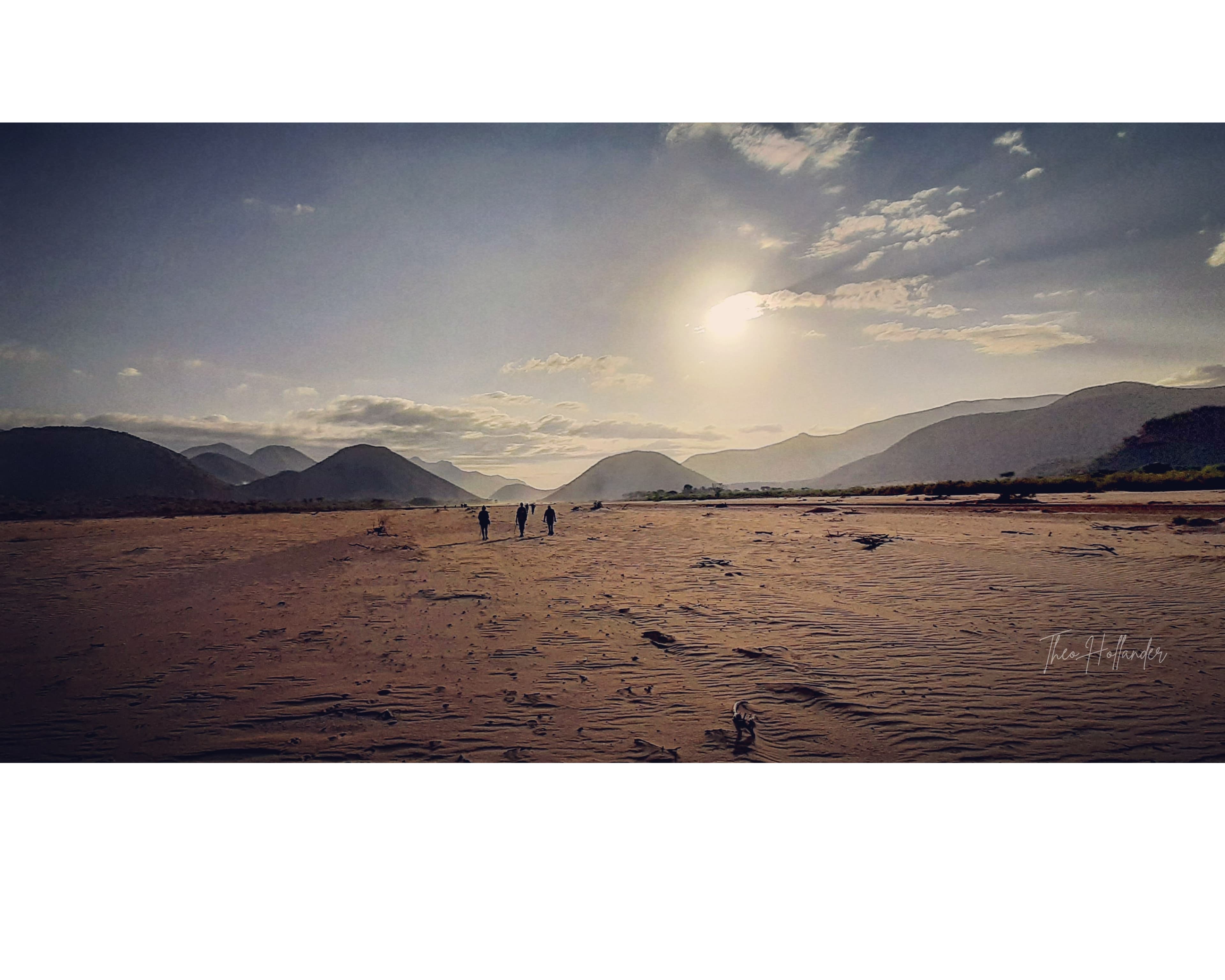
This twelve-day expedition crosses some of the most dramatic contrasts in Kenya: from the green crater forests of Marsabit National Park, where we camp beside Lake Paradise, to the blinding salt flats of the Chalbi Desert and its Gabra camel herders, and from the cool grassy slopes of the Huri Hills to the wind-swept shores of Lake Turkana.
Sibiloi National Park, one of the least-visited parks in the country, combines a petrified forest with the fossil beds of Koobi Fora, where key discoveries about human origins were made. Around Loiyangalani we spend time with the El Molo, Turkana, Samburu and Rendille communities who live along the lake, before ending among the mist-forest and viewpoints of Mount Kulal.
What to Expect
- Camping at Lake Paradise, a crater lake deep in Marsabit National Park's montane forest
- Crossing the vast salt pans and mirages of the Chalbi Desert with Gabra camel herders
- Sweeping views over the Chalbi from the cool, grassy Huri Hills
- The petrified forest and Koobi Fora fossil sites of remote, UNESCO-listed Sibiloi National Park
- Time with the El Molo, Turkana, Samburu and Rendille communities on the shores of Lake Turkana at Loiyangalani
- Mist-forest walks and far-reaching views over Lake Turkana from Mount Kulal
- Gotu Falls and Magado Crater at Nakuprat Gotu
Cost & Logistics
- Logistics & arrangement fee, per person$15/day · $165 total
Ajabu Wild charges a flat $15 per person per day for arranging all logistics. Transport, accommodation, park and conservancy fees, local guides and community fees, and meals are passed on at cost price with no mark-up, and will be confirmed based on group size. The itinerary can also be shortened to 6 nights and 7 days, keeping only the Huri Hills, Sibiloi National Park and Mount Kulal sections. Photos of this route are coming soon.
Upcoming
Suguta Valley Expedition
Suguta Valley · Samburu · Pokot
Early December 2026 (dates TBC) · 12 days
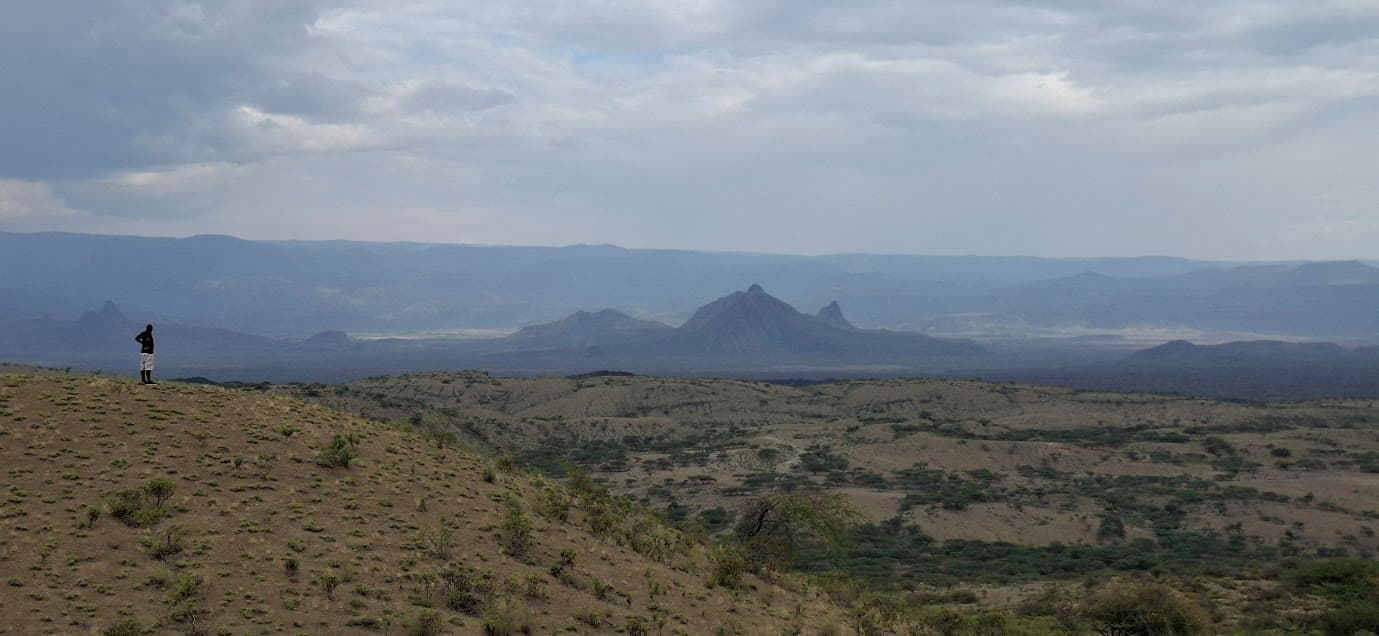
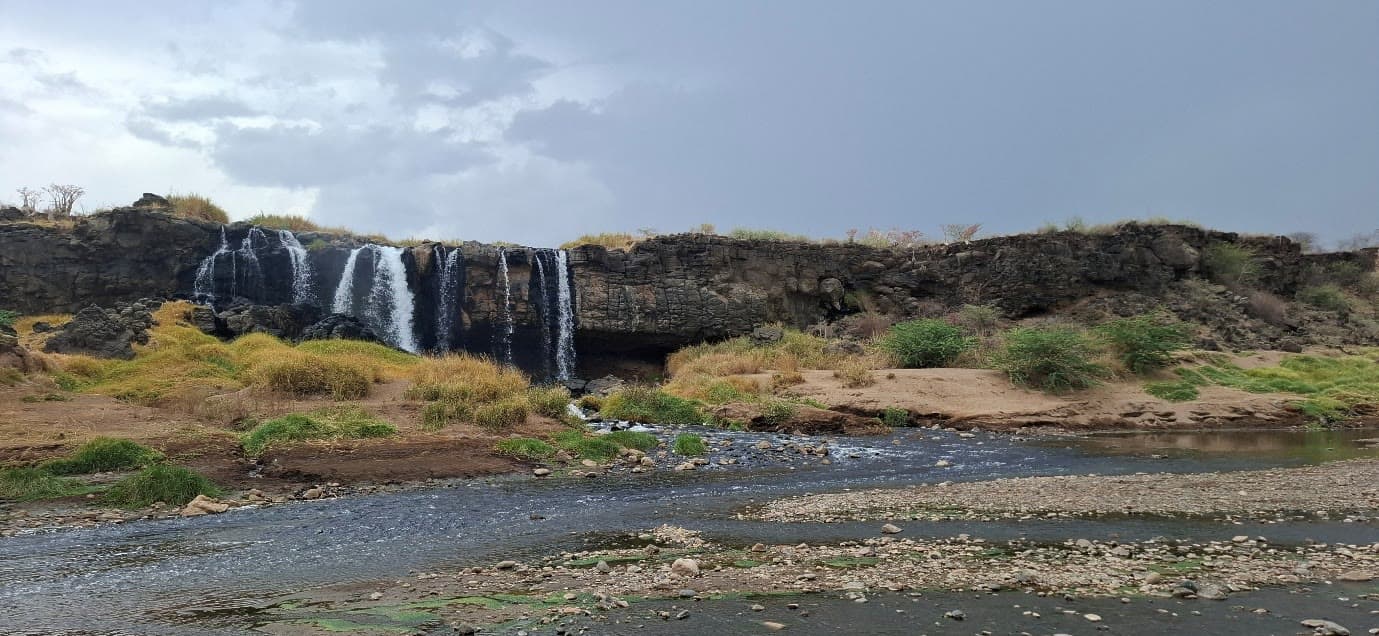
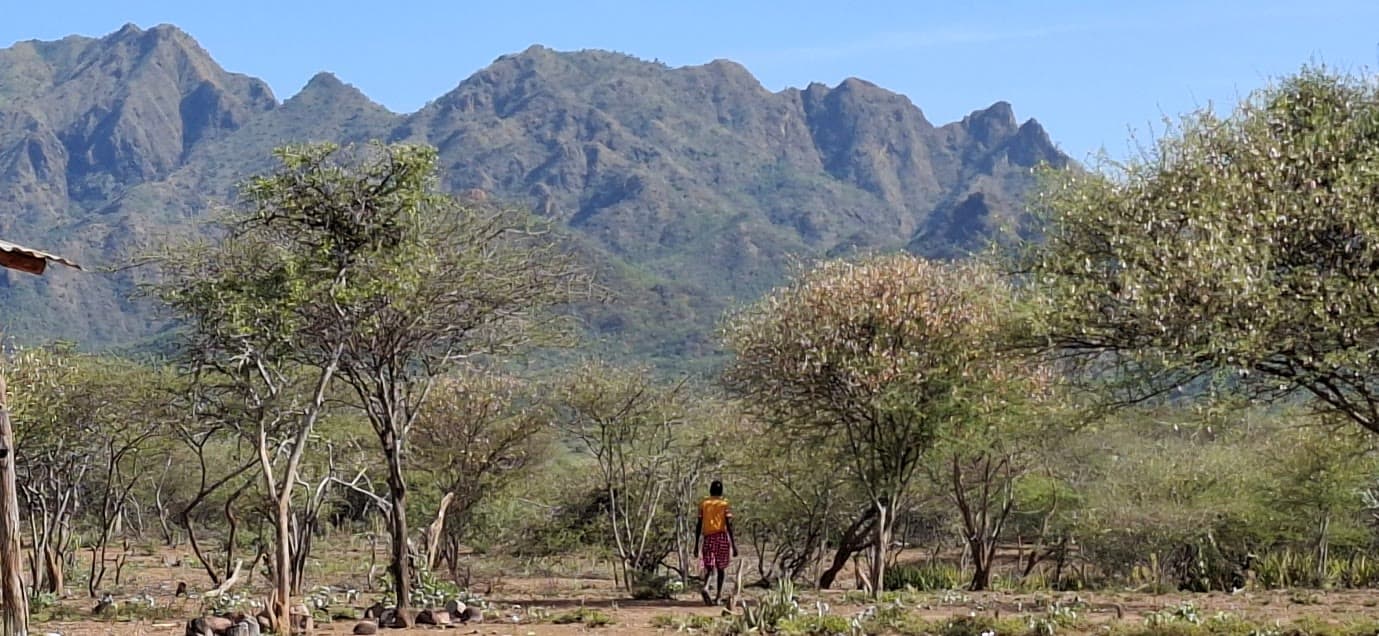
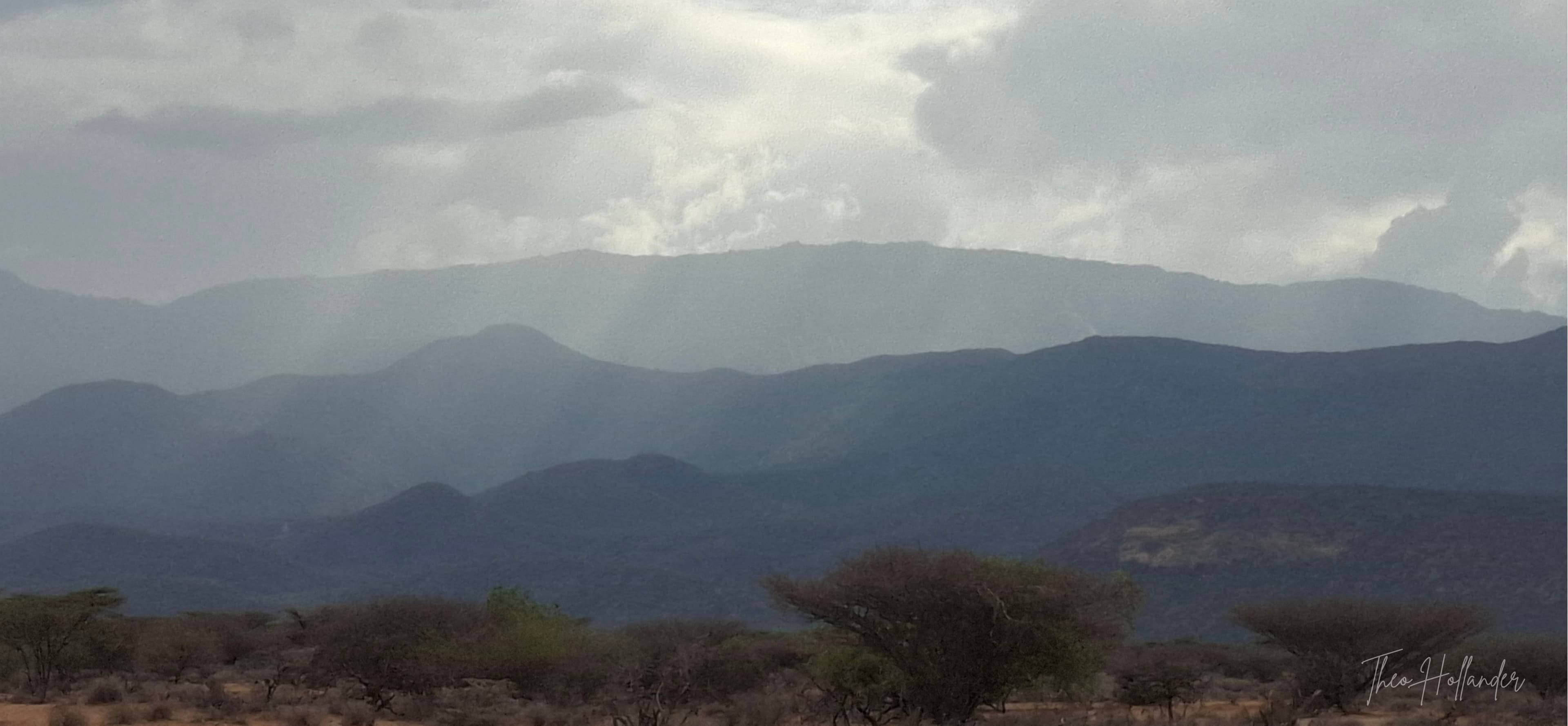
The Suguta Valley is the lowest point in the Gregory Rift: a desert corridor flanked by escarpments and dotted with volcanic mountains. This twelve-day expedition links its most dramatic geology: the giant caldera of Silale, the hot waterfall at Kapedo, the green heights of Mount Tiaty, the golden sand dunes of Kamuge, and the flamingo-lined soda waters of Lake Logipi.
From there the route climbs into the forested slopes of the Nyiro Mountains, the most sacred site for the Samburu, before closing on the Malaso escarpment with a hike down into the Pokot valleys below. Some of the very guides who lead you through these landscapes once stood on opposite sides of conflicts here; today they work together to show travellers the peace their communities have built.
What to Expect
- Camping beside the steaming vents and hot springs of Silale, one of the largest volcanic calderas in the Rift Valley
- Soaking in the natural thermal pool where Kapedo Falls tumbles into the Suguta River
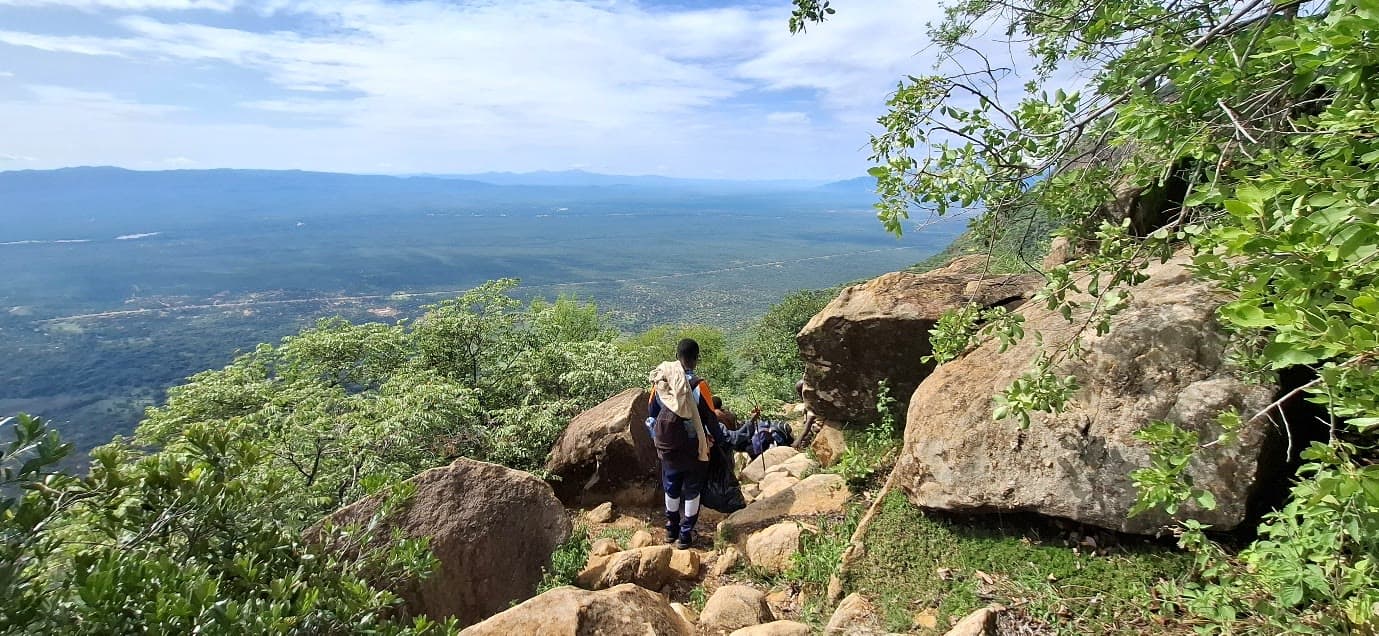
- A trek up Mount Tiaty, deep in Pokot land, for panoramic views across the Rift
- Walking the golden Kamuge sand dunes, among the hottest ground in Kenya
- Flamingo-watching on the shallow soda waters of Lake Logipi
- Cool forest and highland walks on Mount Nyiro, the Samburu's most sacred mountain
- Closing days on the Malaso escarpment, with a hike down into the Pokot valleys below
Cost & Logistics
- Logistics & arrangement fee, per person$15/day · $180 total
Ajabu Wild charges a flat $15 per person per day for arranging all logistics. Transport, accommodation, park and conservancy fees, local guides and community fees, and meals are passed on at cost price with no mark-up, and will be confirmed based on group size. The itinerary can also be shortened to 6 nights and 7 days by dropping Mount Tiaty and the Nyiro Mountains.
Upcoming
Kerio Valley Expedition
Baringo · West Pokot · Turkana · Elgeyo Marakwet
Late January 2027 (dates TBC) · 12 days
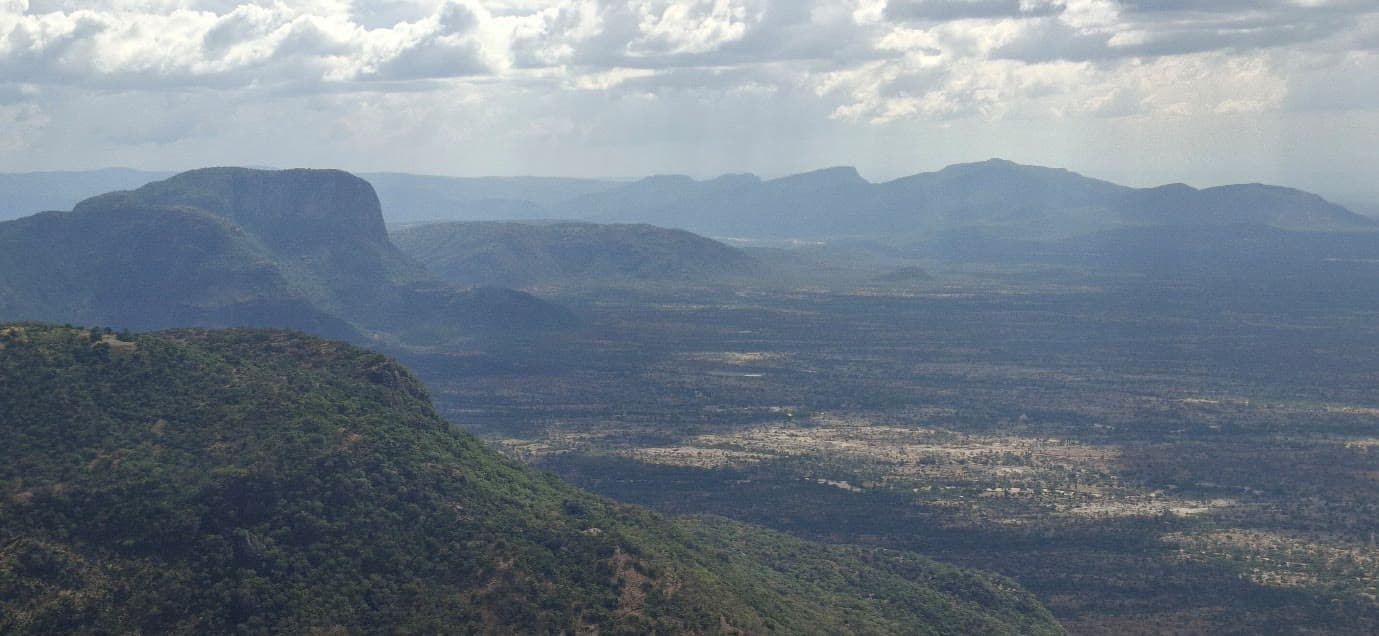
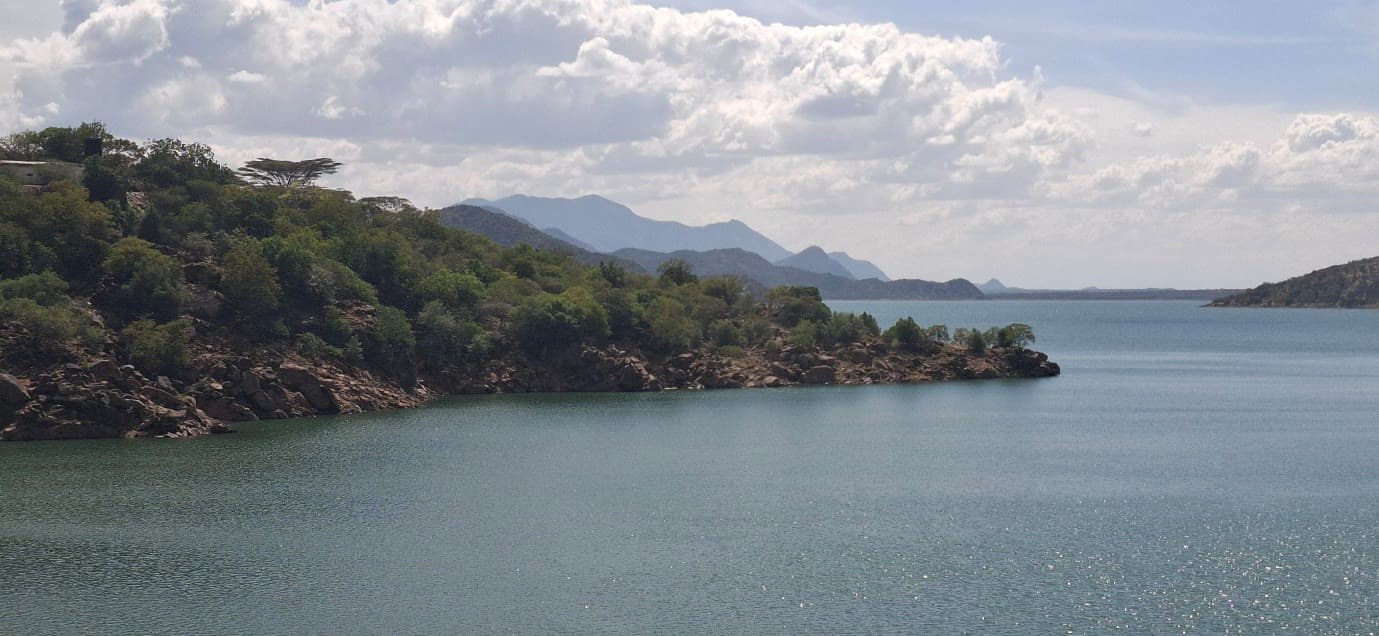
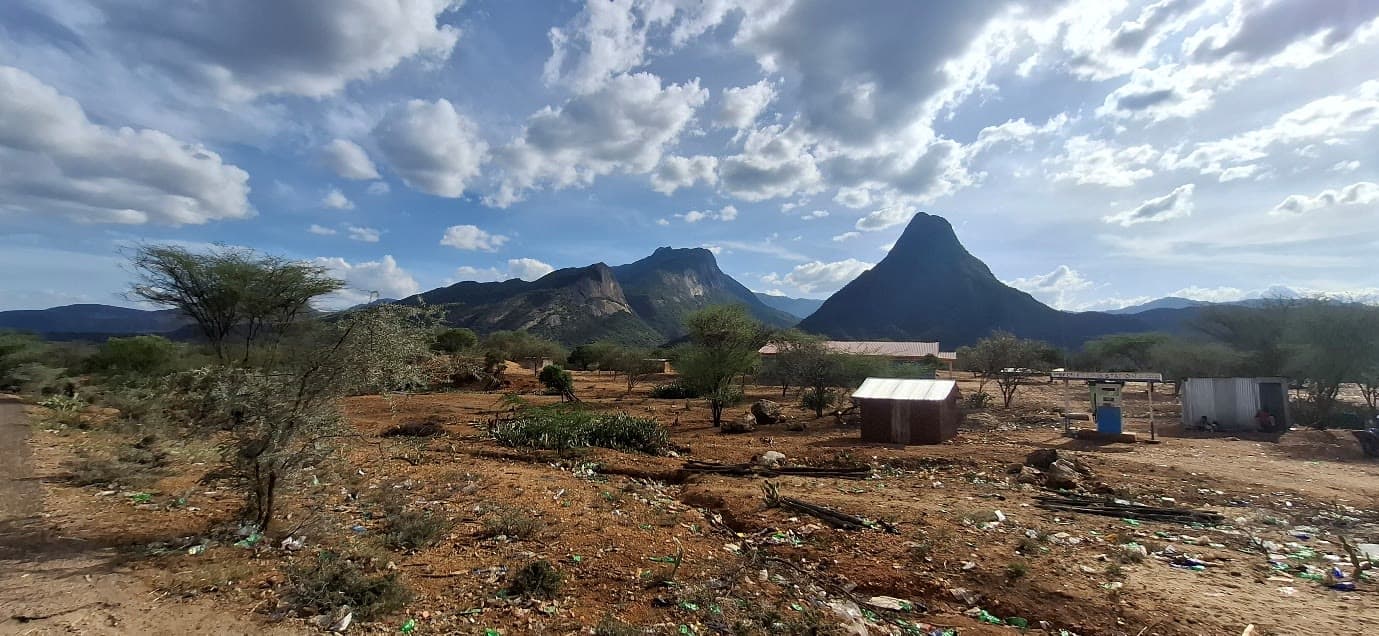
This expedition follows the land as it drops from the highlands of Baringo and West Pokot into the deserts of Turkana. It begins on the Tugen Hills, rich in early human history, continues to the dramatic Jerusalem Cliffs, and climbs Mount Mtelo, the highest point in West Pokot and a Pokot sacred mountain.
From the highlands the route descends to the little-visited Nasalot and South Turkana reserves and the Turkwel Basin, where wildlife and pastoralist life share the same rivers, before finishing on the western shore of Lake Turkana among Turkana fishing communities. Few itineraries cover this much landscape, culture and altitude in under two weeks.
What to Expect
- Standing on the Tugen Hills escarpment, site of important early-hominin fossil finds
- Walking the dramatic Jerusalem Cliffs
- Trekking Mount Mtelo, West Pokot's highest peak and a Pokot sacred mountain
- Exploring little-visited Nasalot National Reserve, below the Turkwel Gorge
- Following the Turkwel River through its basin and gorge
- Time in the rugged, rarely visited South Turkana National Reserve
- Two nights on the western shore of Lake Turkana with Turkana fishing communities
- A final camp on the Elgeyo Marakwet escarpment
Cost & Logistics
- Logistics & arrangement fee, per person$195 total
Ajabu Wild charges a flat $15 per person per day for arranging all logistics. Transport, accommodation, park and conservancy fees, local guides and community fees, and meals are passed on at cost price with no mark-up, and will be confirmed based on group size. The itinerary can also be shortened to 7 days by dropping Mount Mtelo, South Turkana National Reserve and Lake Turkana.
Upcoming
Lake Baringo, Kapedo Falls & Mount Silale
Baringo · Turkana
February 12–15, 2027 · 3 nights
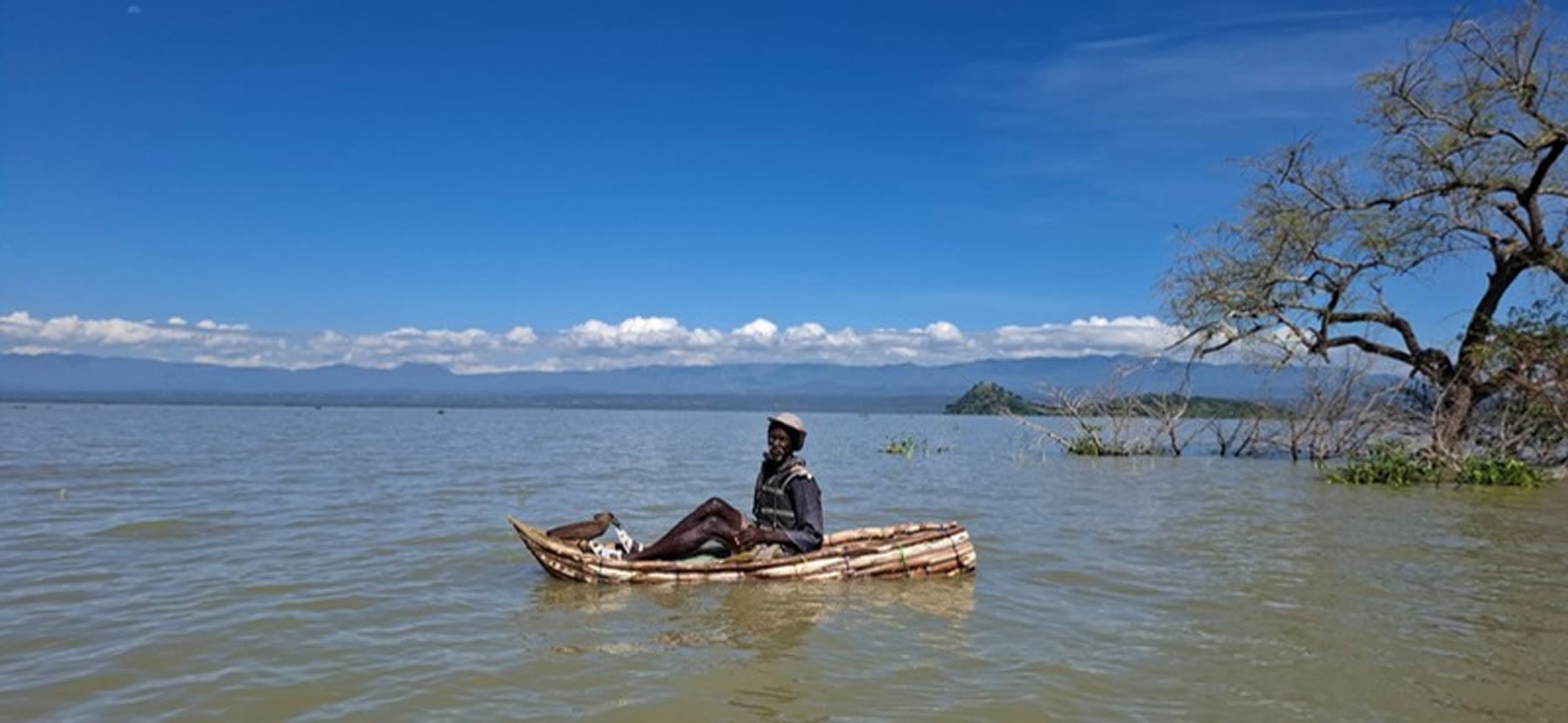
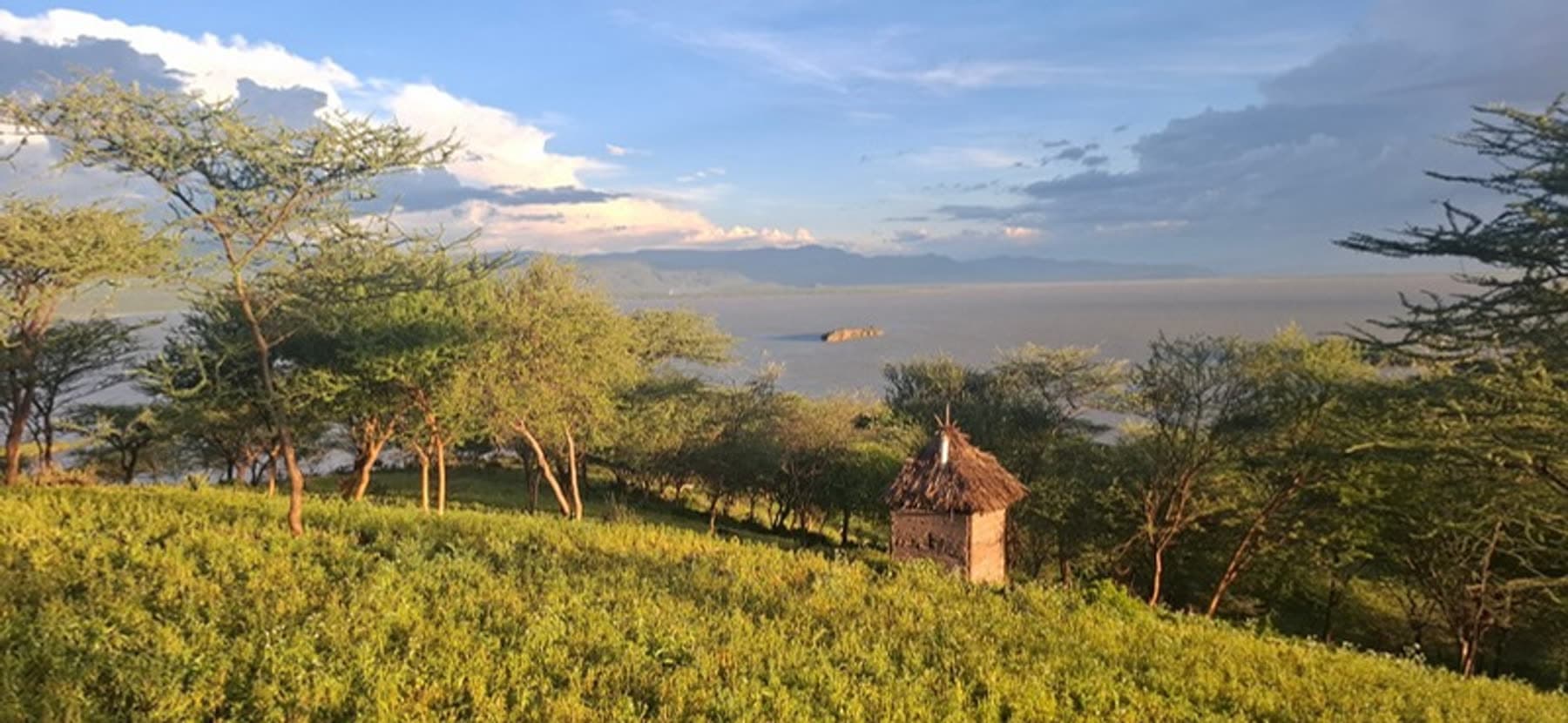
This three-night mini-expedition threads through some of the Kenyan Rift Valley's wildest and least-visited corners. Night one is spent on the shores of Kokwe Island, the largest inhabited island on Lake Baringo, a freshwater oasis ringed by rocky escarpments and alive with fish eagles, hippos, crocodiles, and the Ilchamus fishing communities who have called its shores home for generations.
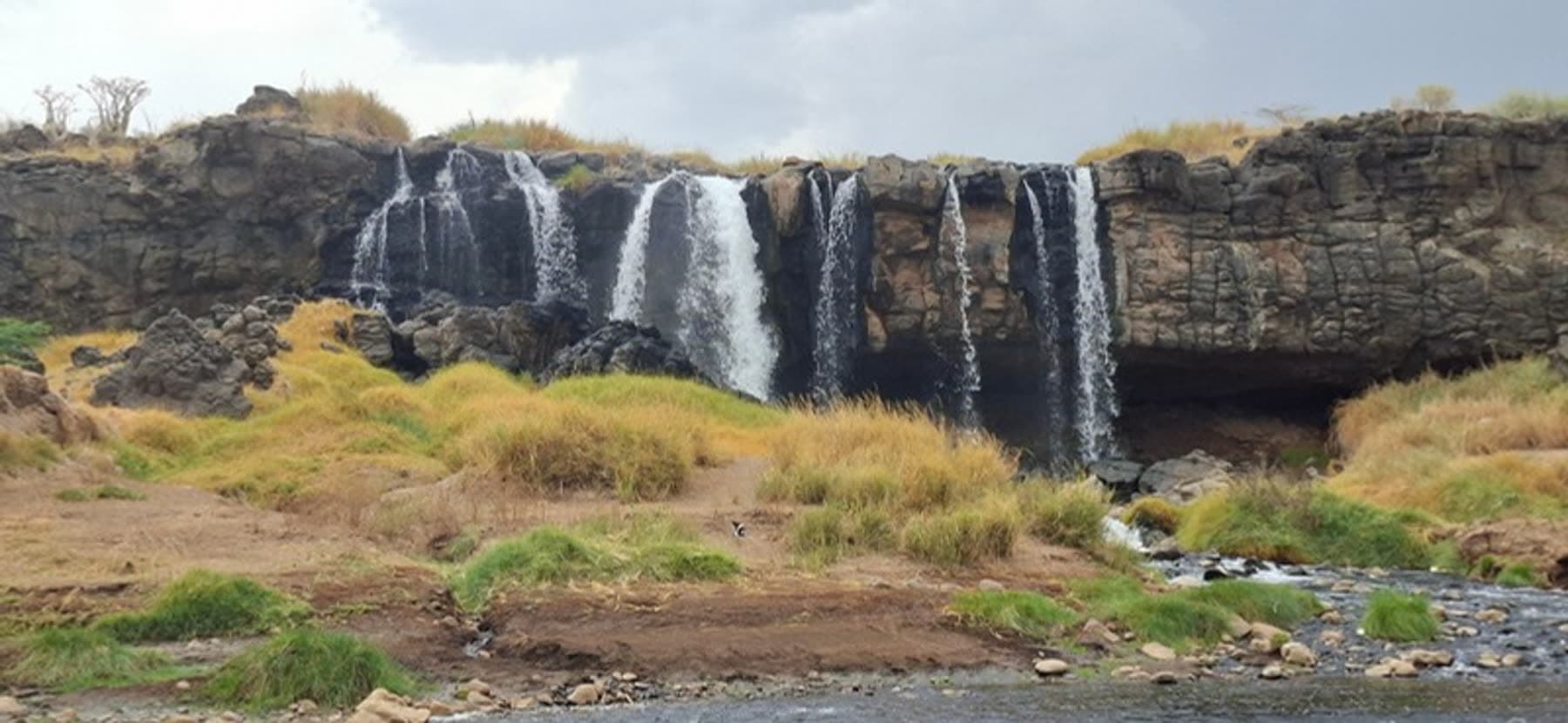
From there the route pushes north into Turkana County to Kapedo, a remote frontier village where the Suguta River meets a set of geothermal waterfalls: hot, mineral-rich cascades tumbling roughly 50 metres over a rocky escarpment, and for centuries a meeting point for Turkana and Pokot herders watering their livestock.
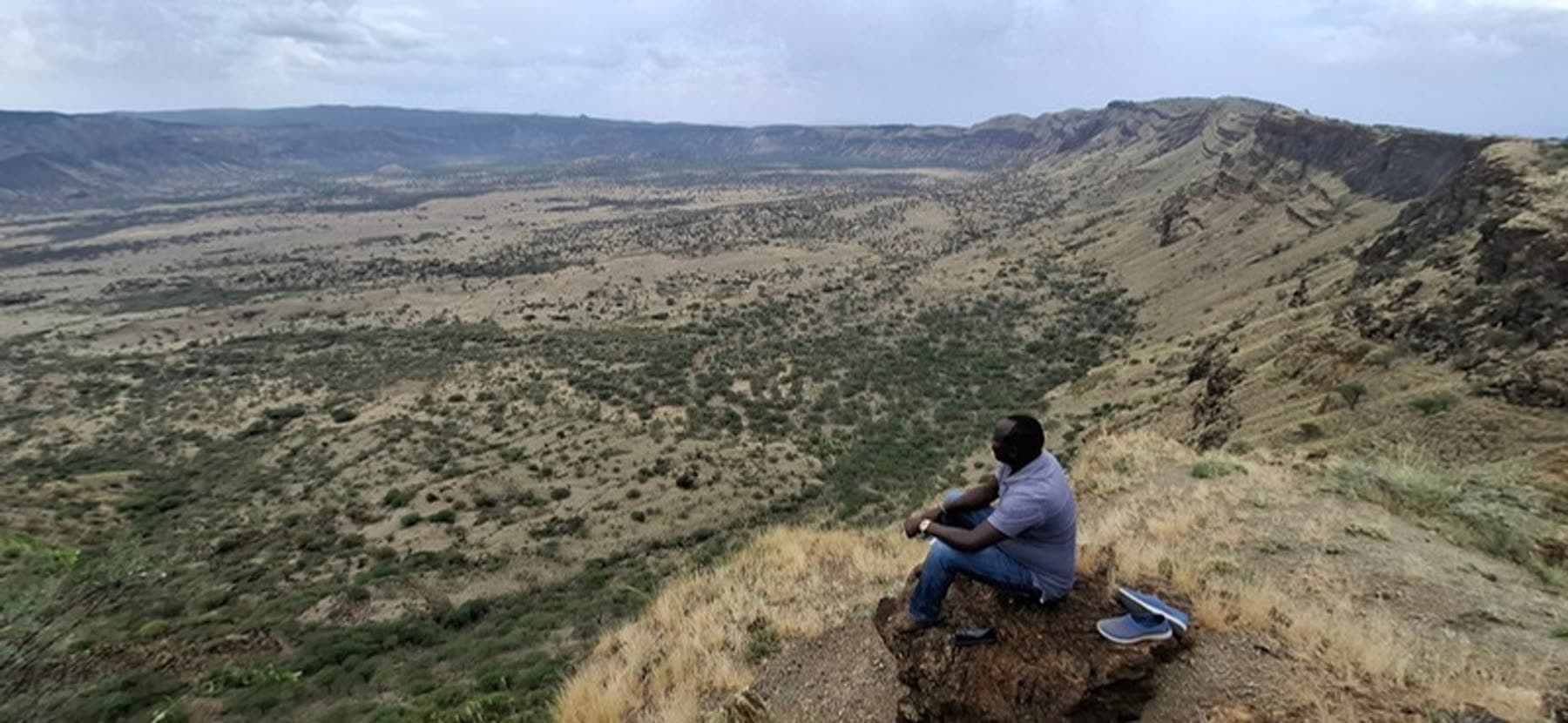
The final leg climbs east of Kapedo to Mount Silali, a dormant shield volcano holding one of the Rift Valley's largest calderas: a five-by-eight-kilometre volcanic bowl reached on foot via the bat-filled Silale lava caves, where we pitch our third and final camp on a plateau inside the crater itself. Especially for these last two nights, Turkana and Pokot communities work together to guide the way, helping to cement the peace that has taken hold in this area thanks to Interpeace's peacebuilding work.
What to Expect
- A boat ride across Lake Baringo's glassy waters to Kokwe Island
- A soak in Kapedo's hot mineral springs
- An optional scramble through bat-filled volcanic caves
- A star-strewn camp on the plateau inside the Silale caldera itself
Cost & Logistics
- Group of three, all-inclusive≈ $800 per person
Price depends on group size: for a group of three it comes to roughly $200 a day, covering food, drinks, local guides, camping and conservation fees, transport, and all logistics.
Don't See a Date That Fits?
We can also build a private departure around your own dates, or design a fully bespoke journey from scratch. Get in touch and let's talk through what you have in mind.